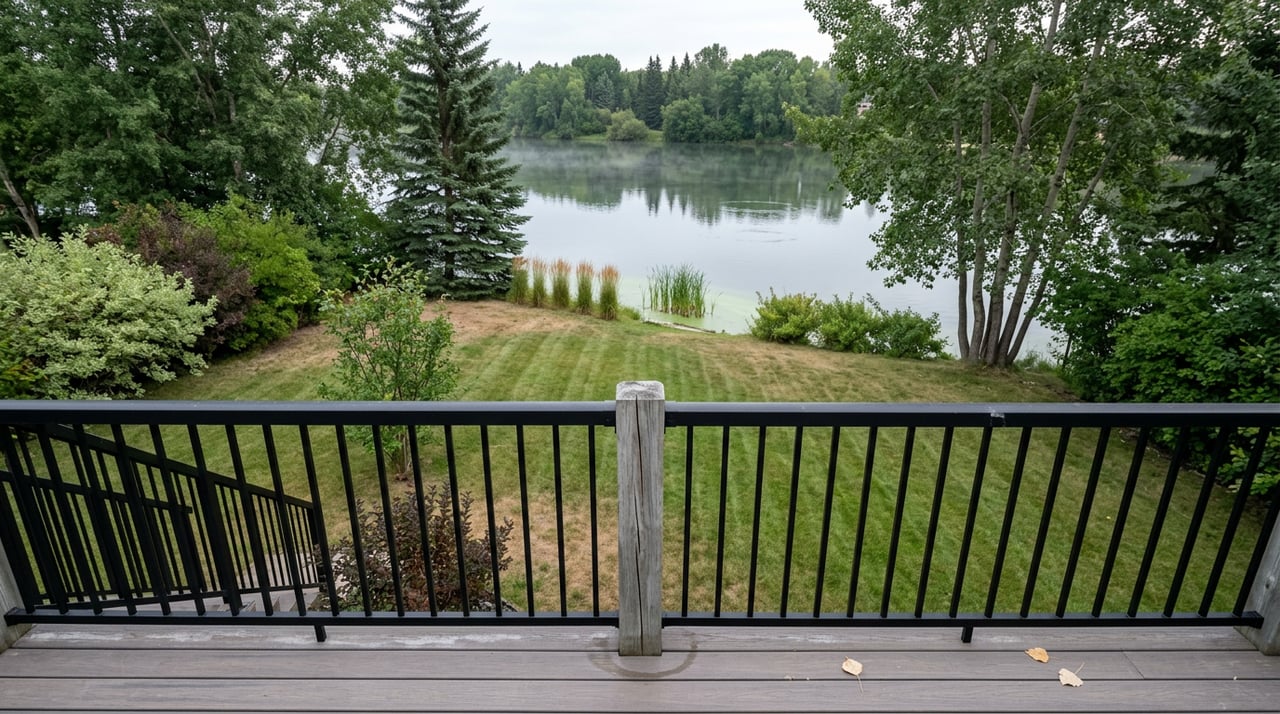
Stand on the dock near the summer entrance to Sundance Park on a calm August afternoon and the water in front of you can look perfectly swimmable while the shallows forty feet down the shoreline carry a visible green sheen. Same lake. Same afternoon. Two different answers to the question every Sundance household is asking right now: is it safe to let the kids in today?
That split-screen reality is the actual story this month, not the advisory itself. Alberta Health Services has visually confirmed cyanobacteria, commonly called blue-green algae, in Lake Sundance and has issued an advisory that runs through November. What that advisory does not do is close the lake. It asks residents to look at the water where they intend to swim, on the day they intend to swim, and make a call based on what's actually in front of them rather than what the lake looked like yesterday or what a neighbor posted on Facebook.
What The Advisory Actually Says, Not What It Sounds Like
The guidance from AHS, as posted by the Sundance Lake Residents Association, is specific: avoid swimming or wading in areas where a bloom is visibly present, but if no bloom is showing, recreational use can continue. That's a meaningfully different instruction than "the lake is closed," and it's also a different instruction than "the lake is fine." It's neither. It's a standing requirement to check locally, because wind and water movement can push a bloom into one bay while the swimming area two hundred meters away stays clear.
The Lake Sundance website backs this up with a waterfront flag system that supplements the AHS advisory. A red flag can go up for reasons beyond algae, thin ice in winter, severe weather, or a scheduled chemical application, so the flag alone isn't a full algae status either. The two systems work together: the flag tells you if the association has flagged a broad concern that day, and your own look at the water tells you whether the specific spot you're about to swim in has a visible bloom right now. Neither one replaces the other, and the two together provide a fuller picture.
Why This Season Looks Different From Past Ones
Here's the part that actually matters if you've lived in Sundance for a few summers and remember previous algae seasons resolving faster. The association has said outright that the old approach, chemical treatment for a quick visual fix, never touched the underlying problem: years of nutrient accumulation in the lake bed that feeds the algae in the first place. This year's program is built to attack that nutrient load directly, and it's running on three fronts at once rather than one.
The timeline so far:
- July 24: MetaFloc treatment began, a compound designed to bind to phosphorus in the water so it can settle out rather than continue feeding blooms.
- August 5: The third mechanical harvesting pass of the season removed aquatic vegetation, which physically pulls plant material and the nutrients stored in it out of the lake rather than leaving it to decompose and recycle those nutrients back in.
- Week of August 10: A second application of Water Column Clarifier went in, aimed at improving clarity by encouraging suspended particles to bind and settle.
Three separate mechanisms, stacked across three weeks, all aimed at the same root cause. That's a materially bigger intervention than a single treatment, and it's why the association describes this season as a test case for a longer-term management strategy rather than a one-time fix. The lake board has also been clear that aquatic vegetation isn't simply something to eliminate. Plants absorb nutrients as they grow, so the harvesting schedule is a balance between cutting often enough to remove material and not so often that the vegetation loses its own nutrient-uptake function.
If you're the kind of resident who checks the water and thinks "didn't they already treat this?", the answer is yes, multiple times, and the program is designed to keep going through the season rather than stop after the first visible improvement.
The Rest Of Sundance Summer Isn't On Pause
None of this shuts down the park. The cook shack near the summer entrance is still running first come, first served, which remains the easiest way to grab a spontaneous lakeside lunch without planning ahead. BBQs and picnic tables are scattered throughout the park on the same basis, though the rules are specific: charcoal briquettes only in the fixed BBQs, no personal firepits or wood fires, and tabletop propane units are the one exception.
Guest limits are worth knowing if you're hosting this month. Adult members can bring up to twelve guests per household per day, and members under eighteen can sign in up to three of those twelve. Larger gatherings are capped too: each household gets only two group bookings of up to thirty guests between June 1 and September 10.
The Stampede Breakfast on July 4 already came and went this year, pancakes and sausages for members and their registered guests, but it's a useful marker for how the association threads community events through a season that's also dealing with water management. Life at the lake keeps moving even while the treatment schedule runs in the background.
One more thing worth knowing: even with this year's fee increase, Lake Sundance still maintains some of the lowest membership fees among lake associations in the Calgary area. That's not a small detail if you've ever priced out what other lake communities charge for access. Sundance has stayed one of the more affordable lake memberships in the city even as the water management work has ramped up.
The Docks Are Also Mid-Project
Separate from the water treatment, the long-promised dock upgrade is underway. The association flagged this back at the January Town Hall, and construction on new docks, refreshed landscaping, and updated seating areas began this summer with a target completion in September. It's a reminder that this isn't a summer defined only by algae management. The park is investing in the physical space at the same time it's working through the water itself, which is a more accurate picture of the season than either story told alone.
There's also a smaller, less visible repair on the association's list: water damage on the banquet hall balcony, which the board flagged as something to address before it turns into a bigger problem. Worth knowing if you're planning to book the hall later this year.
What To Actually Do This Weekend
The practical takeaway isn't complicated, but it does require a small habit change from whatever you did in past summers. Before you or your kids get in the water, look at the water where you're getting in, not the lake in general. If there's a visible bloom, cloudy scum, or a paint-like sheen, stay out of that spot and try another access point instead of assuming the whole lake is off limits. If it looks clear where you are, AHS guidance supports continuing to swim there. Check again next time, because conditions shift with wind and temperature over the course of a single day.
That's a different mental model than "wait for the all clear," and it's the one the association and AHS are both asking residents to adopt for the rest of this advisory period, which runs through November.
This is the kind of detail that only surfaces when you're paying attention to a neighborhood past the headline. Donna Delaney & Co keeps a close eye on Sundance because it's part of the community, not just a market. If you ever want to talk about what's happening here, on the water or off it, schedule a call.
This article is general information, not legal, tax or financial advice. Consult a qualified professional about your situation.